Promoting Deep Learning
Summary
Students can process new information in a shallow or deep manner.
The Levels of Processing Model shows that deeper processing improves long-term retention of learning.
Learning strategies such as elaborative interrogation and the generation effect promote deeper learning.
In cognitive psychology, our understanding of memory and learning is shaped by considering a range of cognitive models and frameworks. While models such as the Multi-Store Model of Memory and Working Memory are increasingly popularised in education, other theories provide additional important insights into how students can learn effectively.
One key framework is the Levels of Processing Model, first proposed by Craik and Lockhart in 1972. This model helps to explain why some learning strategies lead to better retention than others.
The Levels of Processing Model
The Levels of Processing model (Craik & Lockhart, 1972) indicates that the depth at which information is processed during learning influences how well it is subsequently retained in one’s memory stores.
Processing occurs along a continuum from shallow processing to deep processing. Information that is more deeply processed involves semantic or cognitive analysis.
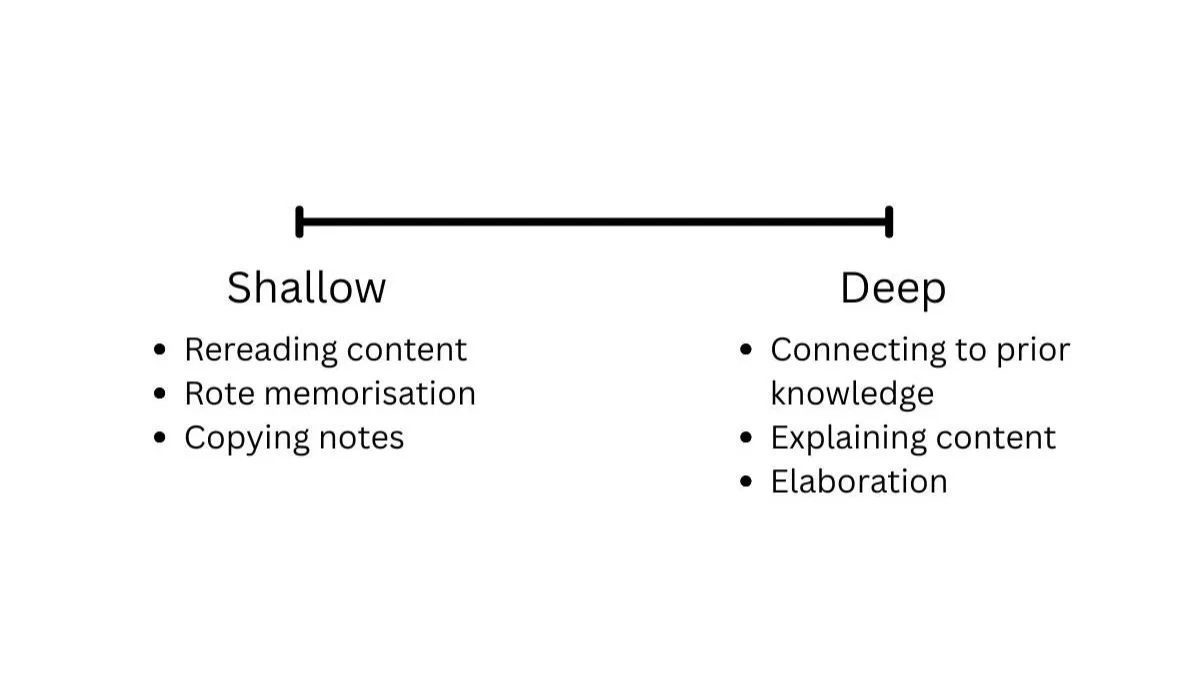
Image 1 : Learning tasks that reflect shallow learning and deep learning
Evidence for the Levels of Processing Model
A key study by Craik and Tulving (1975) involved presenting participants with 60 words and asking them questions that prompted participants to process the words in a shallow or deep manner. Participants were later given a recognition test. The findings showed that words processed more deeply were significantly better remembered than those processed shallowly.
Deep processing is believed to support information being better integrated into one’s memory stores. Information is not stored as individual units of information, but rather in web-like networks. When information is processed deeply, it leads to the new information creating multiple links with existing knowledge networks. A higher number of associative links leads to better retention of that information and allows for information to be more easily accessed later.
Strategies for deeper learning
There are many evidence-based study strategies that students can use to support deeper learning. The challenge is that many of these strategies are unintuitive and cognitively effortful, leading to students often avoiding them. Therefore, explicit instruction of these strategies and how they benefit learning is necessary. Two learning strategies include:
Elaborative Interrogation:
Elaborative interrogation is a learning strategy that involves students explaining why concepts or ideas are true. This often involves students being prompted with ‘why’ or ‘how’ questions, which helps to connect new information within existing knowledge networks.
The Generation Effect:
The generation effect suggests that generating ideas, processes, and answers oneself leads to better retention of learning than passively being shown them (Bjork & Bjork, 2011). Encouraging students to complete independent tasks that require them to generate content supports deeper learning.
Explicitly teaching students how to use effective learning strategies helps students to engage with deeper learning, build confidence and achieve higher academic outcomes.